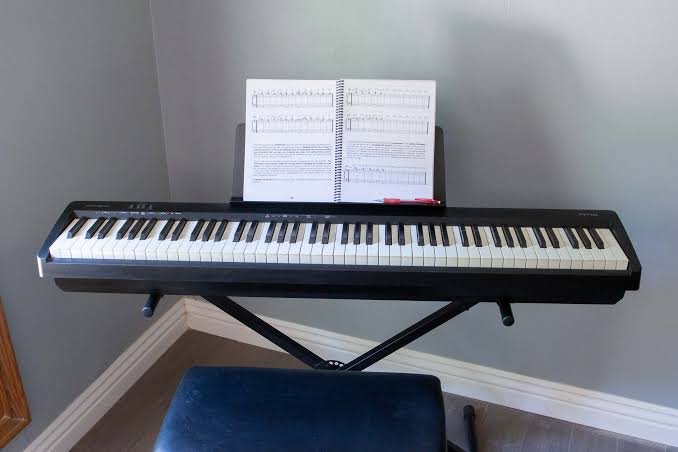

Learning to play the piano can be a rewarding long-term activity. It develops musical understanding, coordination and the ability to interpret written music. For learners who want an instrument at home, a digital piano can offer a practical alternative to an acoustic model.
Digital instruments come in different sizes and configurations. Understanding their features can help learners choose an instrument that supports their current ability and future goals.
Why Digital Pianos Are Popular
Digital pianos are often selected for their convenience. Many models include headphone connections, volume controls and built-in sounds, making them suitable for home practice.
Unlike acoustic pianos, digital models do not require regular tuning. Their electronic sound systems also allow users to explore different instrument tones, depending on the model.
Some instruments are compact and easy to move, while others are designed to resemble traditional upright pianos.
Understanding Keyboard Feel
Keyboard action has a major influence on the playing experience. Basic keyboards may have lighter keys, while more advanced digital pianos offer weighted or hammer-action mechanisms.
Touch sensitivity is another important feature. It allows the instrument to respond to how strongly a player presses a key, helping create differences in musical expression.
Learners who plan to study piano technique should consider how the keyboard feels and whether it supports controlled playing.
Choosing an Instrument for Different Skill Levels
A beginner may need an instrument that is straightforward to use and supports regular practice. A more experienced player may look for a realistic keyboard action, a wider selection of sounds or connectivity for recording.
Before selecting a model, consider:
- Current playing experience.
- Intended musical styles.
- Available practice space.
- Preferred keyboard action.
- Need for headphones or external speakers.
- Budget for accessories.
- Possibility of upgrading in the future.
These factors help narrow the selection without becoming distracted by features that may not be useful.
Exploring the Local Music Market
People researching a digital piano hong kong option may want to compare models, specifications and purchasing arrangements before making a decision.
Hong Kong buyers can consider factors such as delivery arrangements, warranty coverage, product availability and after-sales support. These details are particularly relevant when purchasing a larger instrument that may require careful transportation.
It is also useful to confirm whether accessories such as a stand, bench and pedal are included.
The Importance of Sound Quality
Digital pianos reproduce piano sounds electronically. The result depends on the sound engine, sample quality, speaker system and design of the instrument.
When possible, listen to different models using the same musical passage. Try notes across the keyboard and observe how the sound changes between soft and strong playing.
Headphones can also reveal differences in sound detail. They are useful for private practice, especially in apartments or shared households.
Connectivity for Modern Music Learning
Some models provide USB or MIDI connections that allow communication with computers and compatible applications.
These connections can support recording, notation software and digital music lessons. Certain instruments also include built-in metronomes or lesson functions.
However, additional technology should support rather than replace good practice habits. Learners still benefit from regular exercises, careful listening and feedback from a teacher.
Creating a Comfortable Practice Area
A suitable practice space can encourage consistency. The piano should be positioned where the player can sit comfortably and maintain an appropriate posture.
A stable bench and suitable lighting can make longer practice sessions more comfortable. Headphones may help reduce noise, while a music stand keeps sheet music at a convenient height.
It is also worth considering room temperature, ventilation and protection from moisture or direct sunlight.
Maintaining a Digital Piano
Digital pianos generally require less routine maintenance than acoustic instruments, but they still need reasonable care.
Keep the keyboard clean and avoid allowing liquids or dust to enter the instrument. Follow the manufacturer’s instructions for cleaning, storage and electrical connections.
If keys become unresponsive or electronic functions stop working correctly, consult an authorised service provider rather than attempting unfamiliar repairs.
Frequently Asked Questions
1. Can a digital piano support formal music lessons?
Yes. A suitable digital piano can support regular lessons and practice. Learners should choose a model with an appropriate keyboard action and enough keys for their course requirements.
2. Are headphones useful for digital piano practice?
Yes. Headphones allow private practice and can be especially useful in shared homes. Check that the instrument has a compatible headphone connection.
3. Should beginners purchase an expensive digital piano?
Not necessarily. The most suitable choice depends on learning goals, available space and budget. It is sensible to prioritise essential playing features over unnecessary extras.
Conclusion
A digital piano can provide a convenient and flexible way to learn and enjoy music. Buyers should consider keyboard action, sound quality, connectivity, space and after-sales support before choosing a model. A comfortable instrument that suits the learner’s needs can make regular practice easier to maintain.